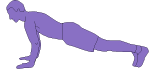
One-Arm Push-Ups
A one-arm push-up is a push-up performed with a single hand on the floor while the other arm stays out of the way, so one side of your body presses your entire weight up and down. It is one of the hardest bodyweight pushing feats there is, because you fight both gravity and the urge to twist. Most people get there through the archer push-up, the main stepping stone that teaches your body to load one arm at a time.
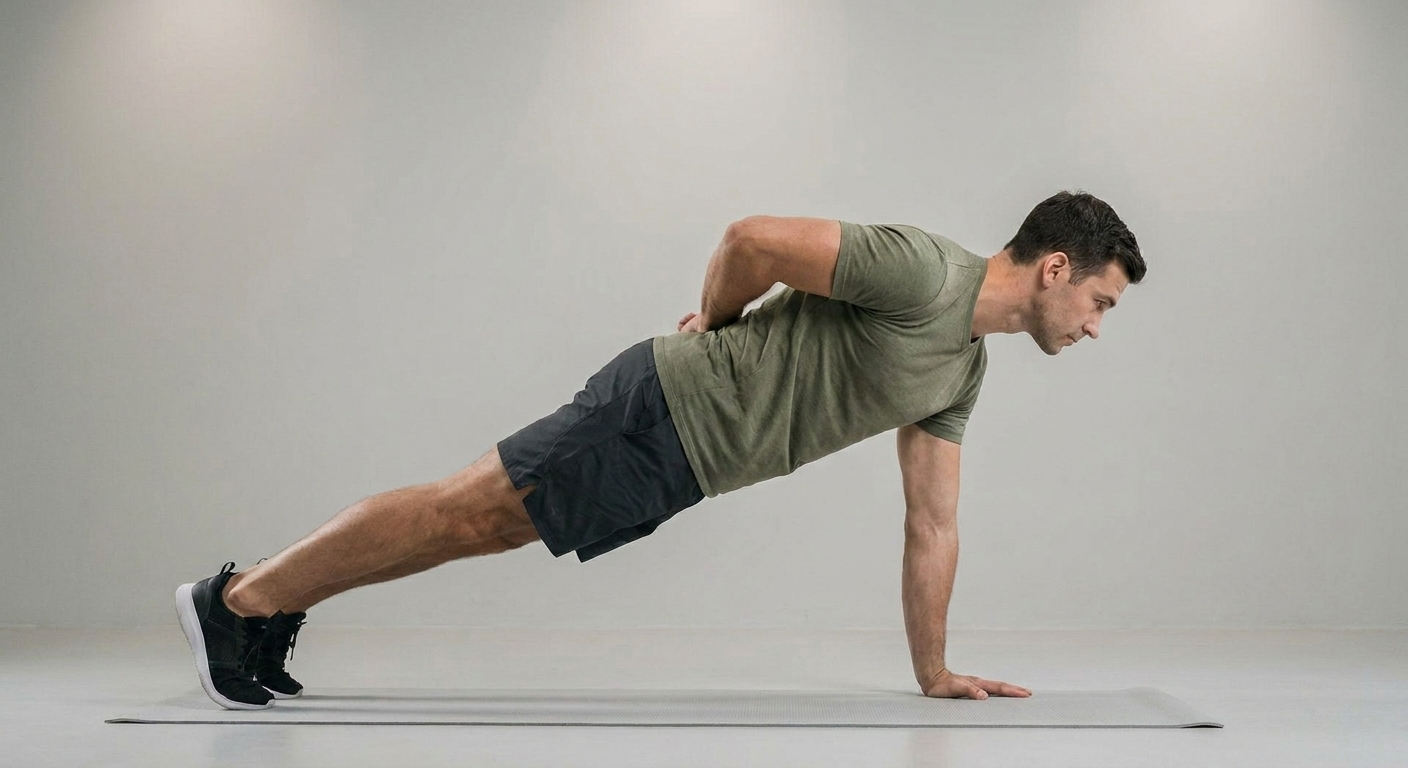
How to do a one-arm push-up
- Set up with one hand flat on the floor, roughly under your chest, and spread your feet wide - the wider your stance, the more stable your base.
- Tuck the free arm behind your back or hold it against your side so it cannot help you.
- Brace hard: squeeze your core, glutes, and the lats on the working side, and keep your body in a straight line from head to heels.
- Lower yourself under control by bending the working arm, keeping your elbow tracking back at a moderate angle rather than flaring straight out.
- Press back up through the working arm without letting your shoulders or hips twist toward the ceiling - the goal is to keep your torso square to the floor the whole way.
- Finish your reps on one side, then switch hands and repeat, keeping the sides even.
Muscles worked
The working arm carries everything, so the chest, triceps, and front shoulder on that side do the heavy pressing. Because all the load sits on one side, it is a demanding unilateral exercise: your core, obliques, and glutes work overtime to stop your hips and shoulders from rotating. Your lats and the muscles around the working shoulder blade also fire hard to keep that joint stable under a load two arms would normally share.
Benefits
- Builds serious one-sided pushing strength and irons out left-to-right differences.
- Trains powerful anti-rotation core control, since your whole midsection has to resist the twist on every rep.
- Improves shoulder stability, because one shoulder has to steady a load usually spread across two.
- Needs no equipment - just floor space and your own bodyweight.
Common mistakes
- Feet too close together. A narrow stance makes balancing far harder. Start wide and only narrow your feet once you are strong and steady.
- Twisting the torso. Rolling your working shoulder up toward the ceiling cheats the movement and stresses your lower back. Keep your chest facing the floor.
- Sagging or piking hips. Letting the hips drop or rise breaks the straight line and leaks power. Stay braced from head to heels.
- Dropping fast. Falling into the bottom instead of lowering under control skips the hardest, most useful part of the rep.
Prerequisites & how to progress to it
Do not chase the one-arm push-up cold. Get strong at standard push-ups first - around 20 or more clean reps - then get comfortable with archer push-ups, which teach one arm to take most of the load while the other only stabilises. That combination builds the pressing strength and anti-rotation control the full move demands.
When you are ready, start with an elevated one-arm push-up: place your working hand on a wall, a countertop, or a sturdy bench. The higher the surface, the less bodyweight you press, so the movement stays honest but manageable. As you get stronger, lower the surface over time - from wall to counter to bench to a low box - until you can press on the floor. Keep your feet wide throughout, and narrow them only once floor reps feel solid. Start with 2 to 3 reps per side and build slowly; clean, controlled reps transfer far better than sloppy numbers.
Explore all push-up variations, brush up on proper push-up form, or follow the full 100 push-ups programme.