Pike Push-Ups
A pike push-up is a push-up done with your hips pushed high into an inverted V, so you press mostly straight down over your head instead of forward. That angle shifts the load off your chest and onto your shoulders, which makes it the best bodyweight bridge between a regular push-up and a full handstand push-up. No equipment, no wall needed to start.
How to do a pike push-up
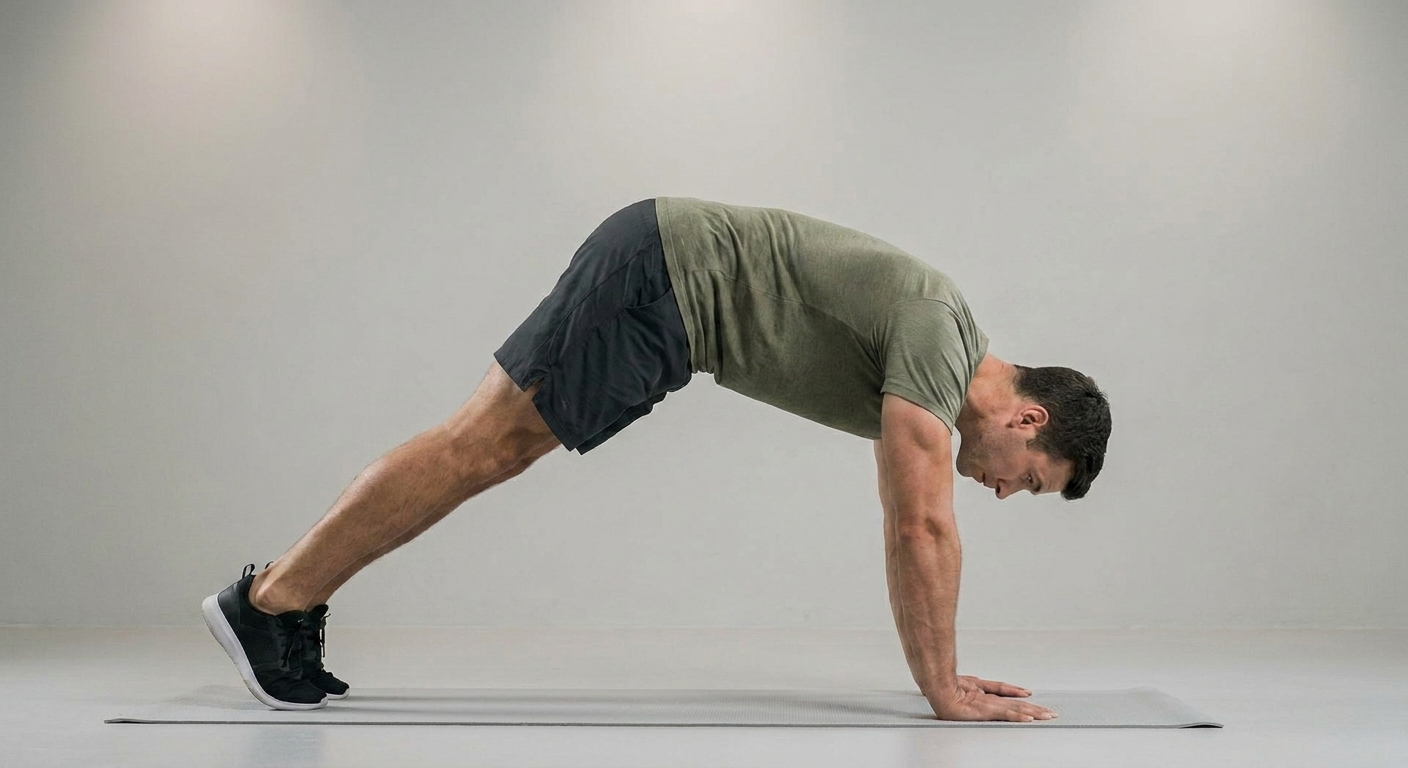
- Start in a push-up position, then walk your feet toward your hands and lift your hips high. Your body should form an upside-down V.
- Straighten your legs as much as your hamstrings allow and let your head hang naturally between your arms. Hands stay about shoulder-width.
- Bend your elbows and lower the crown of your head toward the floor, keeping the hips high the whole time.
- Stop when the top of your head is just above the ground (or lightly touches it).
- Press back up by straightening your arms until you return to the tall inverted V. That is one rep.
Muscles worked
- Shoulders (deltoids) — the front and side delts do most of the work because you press vertically.
- Triceps — drive the elbow extension out of the bottom.
- Upper chest — assists the press at the overhead angle.
- Core and traps — hold the folded position steady and keep the hips from sagging.
Benefits
- Builds real overhead pressing strength without dumbbells or a barbell.
- The most practical stepping stone toward a handstand push-up.
- Needs zero equipment and almost no space.
- Easy to scale up or down, so it grows with you.
Common mistakes
- Hips dropping. If your hips sink, the movement turns back into a regular push-up and your shoulders stop working. Keep them stacked high over your hands.
- Not enough forward lean. Your hands should be far enough forward that your head lowers to the floor, not out in front of your hands.
- Flaring the elbows. Let them travel back at roughly 45 degrees rather than straight out to the sides — it protects the shoulder joint and keeps the press strong.
- Rushing. A controlled lower matters more here than speed. Own the bottom position.
Difficulty and progressions
Pike push-ups sit at intermediate difficulty. Adjust them to your level:
- Easier: put your hands on a bench, step, or sofa. Elevating the hands reduces how much bodyweight your shoulders press.
- Standard: hands and feet both on the floor in the inverted V.
- Harder: elevate your feet on a box or chair. The higher your feet, the more vertical the press and the closer you get to a true handstand push-up.
For reps, aim for 3 sets of 5–10 clean reps. When you can do 3 sets of 12 with control, raise your feet or increase the range. Progress the height gradually rather than chasing numbers.
Ready to keep building? Browse all push-up variations, lock in the basics with proper push-up form, or start the full 100 push-ups programme.