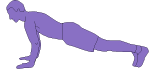
Sphinx Push-Ups
The sphinx push-up is a bodyweight triceps isolation move: you start on your forearms and press up until your arms are straight, driving the movement almost entirely from your elbows. Because your hands stay under your shoulders and your elbows tuck close to your body, the triceps do most of the work while the chest and shoulders take a back seat.
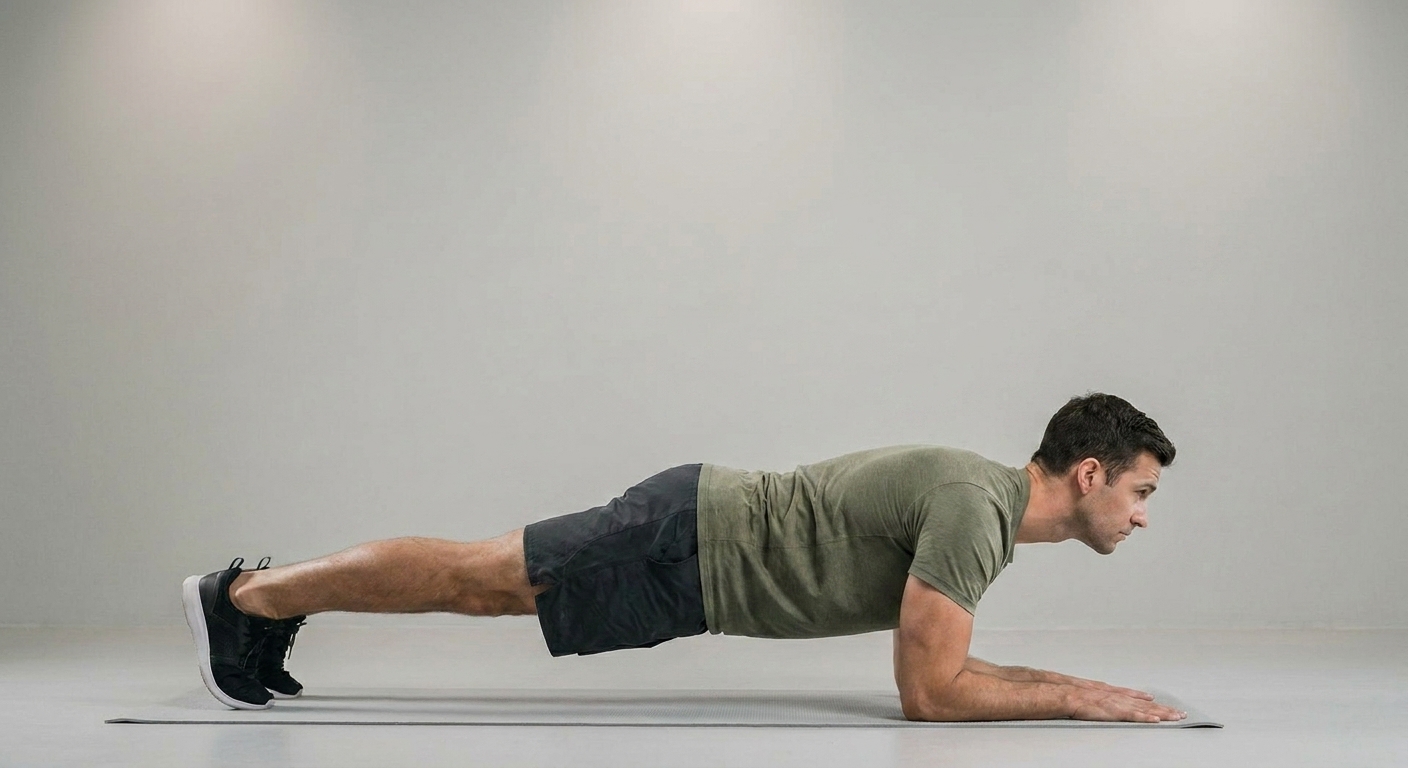
How to do a sphinx push-up
- Start in a forearm plank with your elbows under your shoulders, forearms flat, and legs extended behind you.
- Brace your core and glutes so your body forms a straight line from head to heels.
- Press up by straightening your arms, rolling from your forearms onto your hands one section at a time. Keep your elbows tucked in close.
- Pause at the top with arms fully extended and your body still in one straight line.
- Lower under control back down to your forearms, then repeat.
Muscles worked
The triceps are the star here. Straightening the elbow against your own bodyweight loads them through a full range, which is why this move feels so different from a standard push-up. The chest and front of the shoulders assist with the press, and your core, glutes, and lower back work hard to hold the plank line steady from start to finish.
Benefits
Sphinx push-ups let you target the triceps without any equipment, making them a useful addition to a home routine. They also build pressing strength that carries over to full push-ups, and holding the plank position throughout trains your core and shoulder stability at the same time. The forearm start point means less strain on the wrists than some other variations.
Common mistakes
- Hips sagging: letting your midsection drop shifts load off the triceps and into your lower back. Squeeze your glutes and keep the line.
- Using momentum: bouncing off your forearms robs the triceps of the work. Press smoothly and control the way down.
- Elbows flaring: letting your elbows drift out turns this into a wide press. Keep them tracking close to your ribs.
Difficulty & progressions
If the full version is too hard, drop to your knees to shorten the lever and reduce the load while you build strength. To make it harder, elevate your feet on a step or bench so more of your bodyweight sits over your arms. You can also slow the lowering phase down to add time under tension without changing anything else.
Explore all push-up variations, brush up on proper push-up form, or start the 100 push-ups programme.