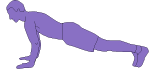
Spiderman Push-Ups
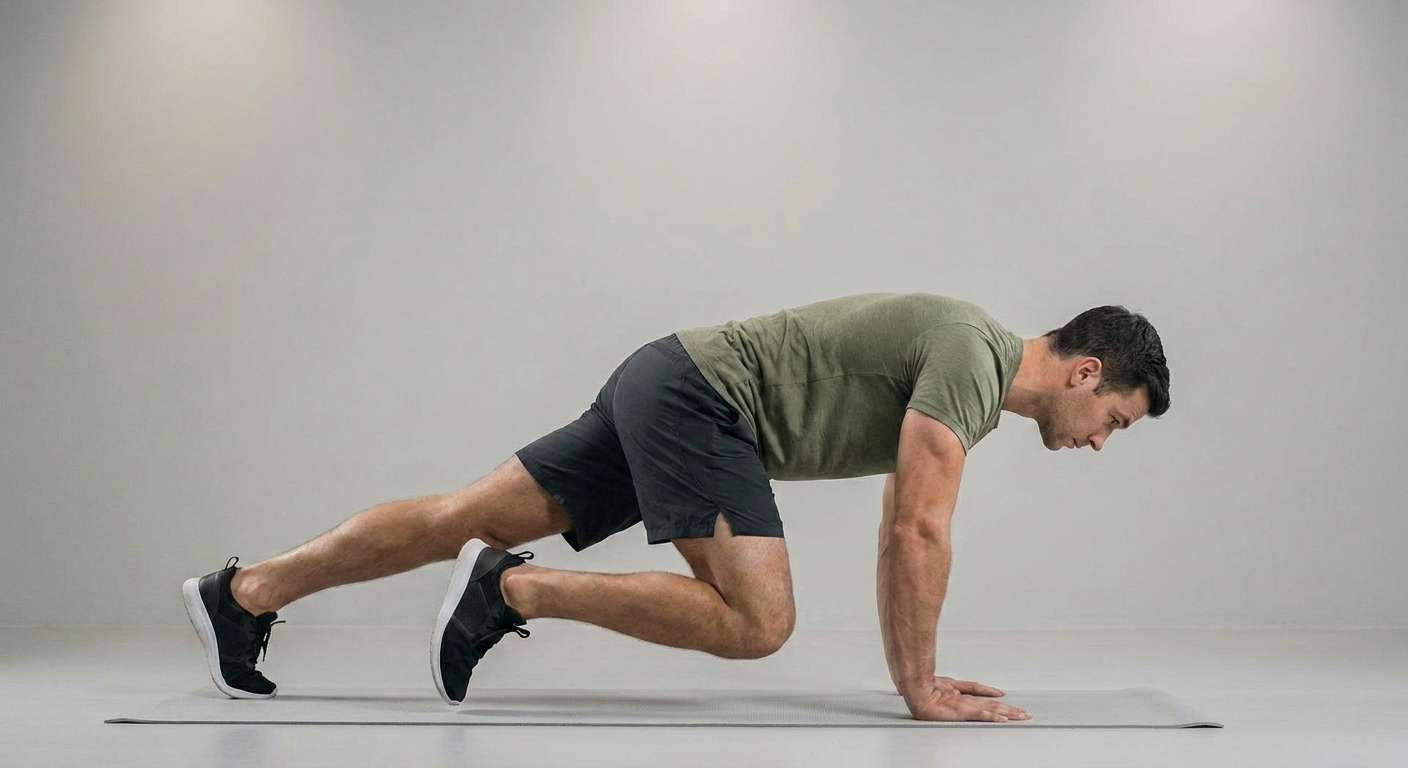
A spiderman push-up is a standard push-up with a twist: on each rep you drive one knee out to the side toward the same-side elbow, then press back to the start and switch sides on the next rep. That single move layers oblique, core, and hip-mobility work on top of the usual chest and triceps effort, which is why it feels harder than it looks.
How to do a spiderman push-up
- Start in a high plank with hands under your shoulders, body in a straight line from head to heels.
- As you bend your elbows and lower your chest, drive your right knee out to the side and up toward your right elbow.
- Keep the knee lifted through the bottom of the rep, then press back up as you return the foot to the start position.
- On the next rep, lower again and bring your left knee toward your left elbow.
- Keep alternating sides, moving under control and breathing out as you press up.
Muscles worked
The pressing part hits the same muscles as a regular push-up: the chest (pectorals), the back of the arms (triceps), and the front of the shoulders. Driving the knee up adds the obliques and deep core, which fire hard to keep your hips square, plus the hip flexors that pull the knee forward. It is a genuine full-body rep.
Benefits
You build upper-body pushing strength while also training the side of your core and opening up the hips, all without extra equipment. Because each rep asks you to stay stable while a leg moves, it improves control and coordination, and it adds variety once plain push-ups start to feel routine.
Common mistakes
- Hips twisting or sagging. Let the hips rotate and the core stops working. Keep them level and pointed at the floor.
- Knee too low. A knee that barely lifts skips the mobility benefit. Aim it toward the elbow, even if the range is small at first.
- Rushing the reps. Speed hides sloppy form. Move slowly enough to time the knee drive with the lowering phase.
Difficulty and progressions
The spiderman push-up sits above a standard push-up in difficulty because of the added core and balance demand. If it is too much, drop your knees to the floor for the pressing motion, or practise the knee drive on its own from a plank without lowering. To make it harder, pause for a second at the bottom with the knee up, or slow the lowering phase to a three-count. When the full range feels smooth on both sides, it becomes a strong addition to any push-up routine.
Explore all push-up variations, brush up on proper push-up form, or follow the full 100 push-ups programme to build toward your goal.